Call for papers/Topics
Topics of interest for submission include any topics related to:
1. Chemical Engineering
Chemical engineering provides the foundational principles of mass, energy, and momentum transfer that underpin the other three disciplines.
-
Thermodynamics & Kinetics (Independent Core)
-
Chemical equilibrium and phase behavior
-
Reaction kinetics and reactor design (batch, CSTR, plug flow)
-
Catalysis and surface science
-
Transport Phenomena (Interrelated Core)
-
Fluid dynamics (multiphase flow, rheology)
-
Heat transfer (conduction, convection, radiation)
-
Mass transfer (diffusion, interfacial mass transfer)
-
Separation Processes (Interrelated Core)
-
Distillation, extraction, and absorption
-
Membrane separation technology (reverse osmosis, ultrafiltration)
-
Adsorption and ion exchange
-
Process Systems Engineering (Independent Core)
-
Process design, synthesis, and intensification
-
Process control, automation, and optimization
-
Plant safety and hazard analysis (HAZOP)
2. Biological Engineering
Biological engineering applies chemical engineering principles to living entities, bridging the gap between molecular biology and large-scale production.
-
Bioprocess & Fermentation Technology (Interrelated with Chemical)
-
Bioreactor design and scale-up
-
Kinetics of microbial growth and enzyme catalysis
-
Downstream processing (isolation and purification of biomolecules)
-
Genetic & Metabolic Engineering (Independent Core)
-
Recombinant DNA technology
-
Metabolic pathway analysis and synthetic biology
-
CRISPR and gene editing tools
-
Biomedical & Tissue Engineering (Independent Core)
-
Biosensors & Bioelectronics (Interrelated with Agricultural)
3. Agricultural Engineering
Agricultural engineering integrates biological and mechanical concepts to optimize food, fiber, and fuel production while managing natural resources.
-
Precision Agriculture & Machinery (Independent Core)
-
Agricultural mechanization and robotics
-
Remote sensing, GIS, and GPS-guided farming
-
Smart sensors for soil and crop monitoring
-
Post-Harvest Technology & Food Engineering (Interrelated with Chemical & Biological)
-
Thermal processing (pasteurization, sterilization)
-
Food preservation, drying, and cold chain logistics
-
Biopolymer packaging and food safety
-
Soil & Water Engineering (Interrelated with Environmental)
-
Irrigation system design (drip, sprinkler) and drainage
-
Soil mechanics and tillage dynamics
-
Hydrology and watershed management
-
Controlled Environment Agriculture (Interrelated with Biological)
-
Greenhouse design and climate control
-
Hydroponics, aquaponics, and vertical farming
4. Environmental Engineering
Environmental engineering acts as the ultimate safeguard, treating the wastes generated by chemical, biological, and agricultural practices.
-
Water & Wastewater Treatment (Interrelated with Chemical & Biological)
-
Physicochemical treatment (coagulation, sedimentation, filtration)
-
Biological treatment (activated sludge, anaerobic digestion)
-
Advanced oxidation processes and desalination
-
Air Quality Engineering (Interrelated with Chemical)
-
Particulate and gaseous pollutant control (scrubbers, cyclones)
-
Atmospheric dispersion modeling
-
Greenhouse gas mitigation and carbon capture
-
Solid & Hazardous Waste Management (Interrelated with Agricultural)
-
Landfill engineering and leachate management
-
Composting and organic waste stabilization
-
Hazardous waste remediation and incineration
-
Sustainability & Ecological Engineering (Interrelated with All Fields)
-
Life Cycle Assessment (LCA) and circular economy
-
Bioremediation and phytoremediation of contaminated sites
-
Environmental impact assessment
5. Major Interrelated Nexus Zones
When these four disciplines collide, they create highly integrated, modern fields of study:
-
The Food-Energy-Water (FEW) Nexus
-
Optimizing water use in agriculture (Agricultural + Environmental)
-
Converting agricultural waste into bioenergy via anaerobic digestion (Agricultural + Biological + Chemical)
-
Developing eco-friendly fertilizers that minimize runoff (Chemical + Agricultural + Environmental)
-
Biorefineries & The Bioeconomy
-
Environmental Biotechnology
-
Using genetically engineered microbes to clean up oil spills or heavy metals (Biological + Environmental)
-
Developing microbial fuel cells to generate electricity during wastewater treatment (Biological + Environmental + Chemical)




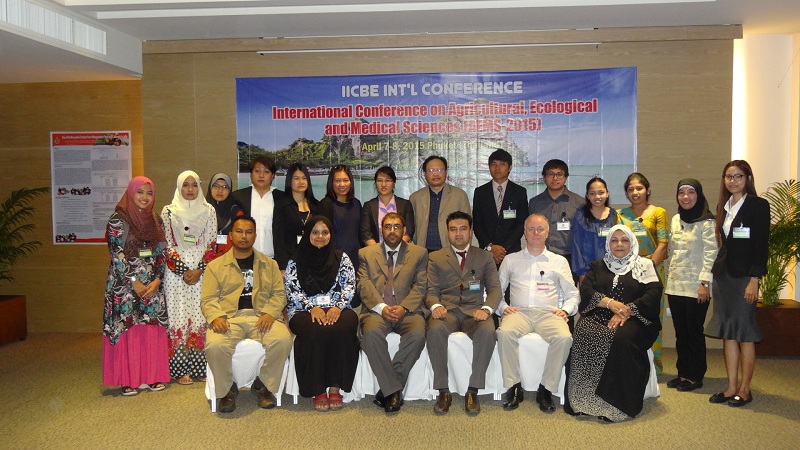
 Welcome to the official site of IICBEE. Our goal is to to bring together Researchers, Scientists, Engineers, Scholars and Students in the areas of Engineering & Bio-sciences, and provides a forum for dissemination of results, new ideas, Research & development and practical experiments, which concentrate on both theory and practices, for the benefit of human Being and Society.
 +91 9781001229
 +351920489940
 +66849204416
 +905333069621